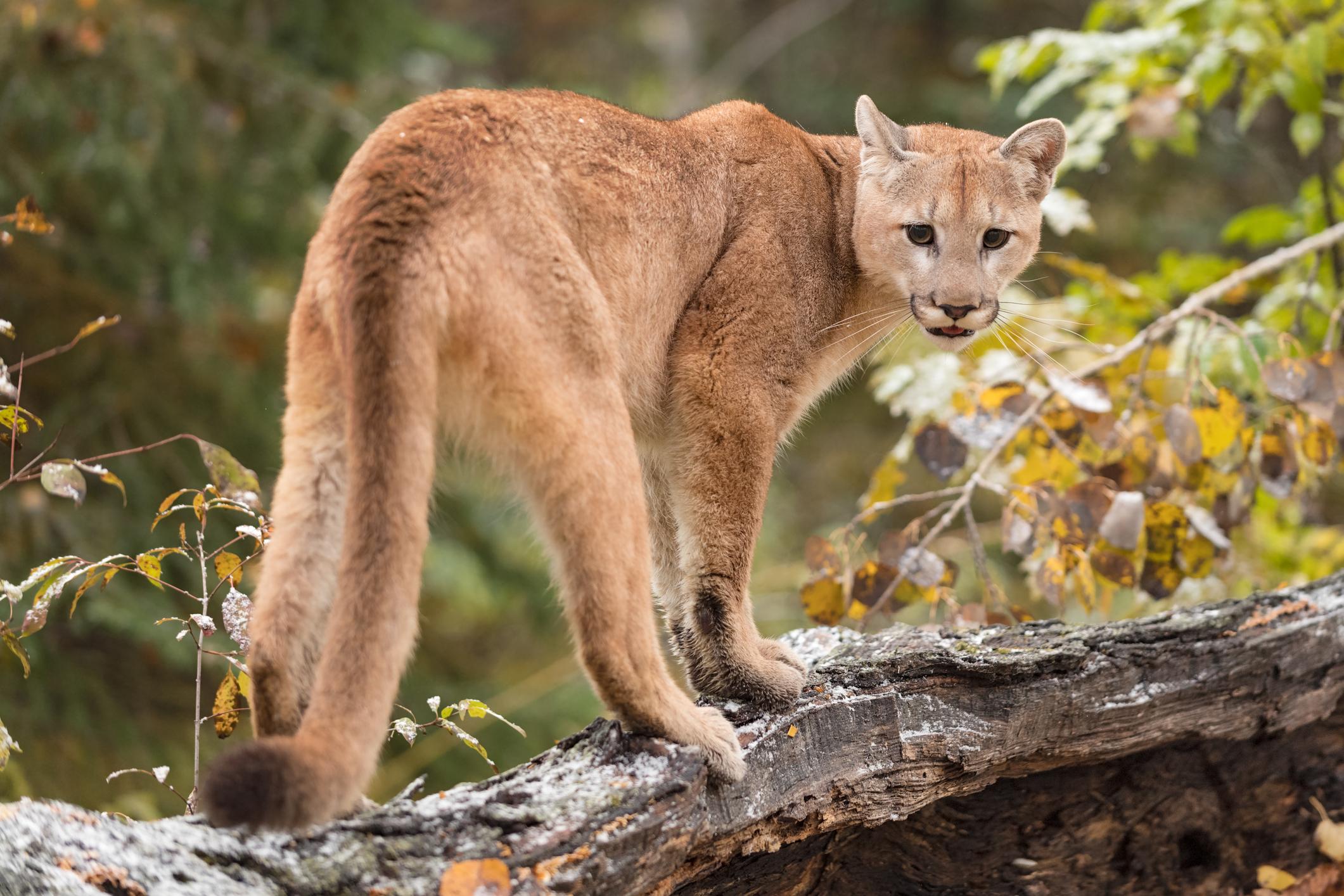
IMPLICATIONS ON THE PUBLIC USE OF TWO NATURE CONSERVATION UNITS IN THE GERICINÓ-MENDANHA MASSIF, WITH THE FIRST RECORD OF PREDATION OF Hydrochoerus hydrochaeris (Linnaeus, 1766) BY Puma concolor (Linnaeus, 1771), STATE OF RIO DE JANEIRO
DOI:
https://doi.org/10.47977/2318-2148.2025.v13n18p22Keywords:
Wild cats; diet; protected areas; visitors; Atlantic ForestAbstract
This study presents information on the first documented instance of a large prey species being hunted by Puma concolor (Linnaeus, 1771), specifically a juvenile Hydrochoerus hydrochaeris (Linnaeus, 1766), within the Gericinó-Mendanha massif, located in the municipality of Rio de Janeiro. This event took place in a publicly accessible area of the Serra do Mendanha Municipal Natural Park. The predation was recorded three years after the confirmation of the recolonization of this southeastern Brazilian region by the species, which had been considered locally extinct for approximately a century. This case serves as a critical indicator for environmental authorities to reevaluate their wildlife conservation policies, considering concerns about potential predation of domestic animals in adjacent areas, public use of protected areas, as well as the preservation of this species, which is listed as endangered.
Keywords: Wild cats; diet; protected areas; visitors; Atlantic Forest.
Downloads
References
AZEVEDO, F. C. et al. Puma activity patterns and temporal overlap with prey in a human-modified landscape at Southeastern Brazil. Journal of Zoology, [S. l.], v. 305, n. 4, p. 246-255, 2018. ISSN (Online) 1469-7998. DOI: https://doi.org/10.1111/jzo.12558.
COSS, R. G. et al. The effects of human age, group composition, and behavior on the likelihood of being injured by attacking pumas. Anthrozoös, [S. l.], n. 22, v. 1, p. 77-87, 2009. ISSN (Online) 1753-0377. DOI: https://doi.org/10.2752/175303708X390491.
ESTADO DO RIO DE JANEIRO. Portaria SEMA 01 de 05 de junho de 1998. Lista das espécies da fauna ameaçadas de extinção no estado do Rio de Janeiro. Diário Oficial do Estado do Rio de Janeiro, n. 102, p. 9-16, 1998.
GAMA, G. Onça que devorou caseiro é reativa com humanos e ameaça ataque em clínica. CNN Brasil, 2025. Disponível em: https://www.cnnbrasil.com.br/nacional/centro-oeste/ms/onca-que-devorou-caseiro-e-reativa-com-humanos-e-ameaca-ataque-em-clinica/. Acesso em: 28 jul. 2025.
KARANDIKAR, H. et al. Dietary patterns of a versatile large carnivore, the puma (Puma concolor). Ecology and Evolution, [S. l.], n. 12, e9002, 2022. ISSN (Online) 2045-7758. DOI: https://doi.org/10.1002/ece3.9002.
KERTSON, B. et al. Human-cougar interactions: a literature review related to common management questions. Human-cougar interactions science review team. Olympia: Washington Department of Fish and Wildlife, 2022. Disponível em: https://wdfw.wa.gov/sites/default/files/publications/02296/wdfw02296.pdf. Acesso em: 28 jul. 2025.
MARTINS, R. A. A.; PONTES, J. A. L. Inventário e monitoramento da mastofauna terrestre da Reserva Particular do Patrimônio Natural Bicho Preguiça, Rio de Janeiro, Brasil: dados preliminares. In: 1º. BIOEMFOCO, 2019, Rio de Janeiro, Centro Universitário São José. Disponível em: https://www.researchgate.net/publication/341998625_INVENTARIO_E_MONITORAMENTO_DA_MASTOFAUNA_TERRESTRE_DA_RESERVA_PARTICULAR_DO_PATRIMONIO_NATURAL_BICHO_PREGUICA_RIO_DE_JANEIRO_BRASIL_DADOS_PRELIMINARES. Acesso em: 15 jan. 2025.
MARTINS, R. A. A.; PONTES, J. A. L. Registro da ocorrência de Pecari tajacu (Linnaeus, 1758), uma espécie que era declarada extinta no município do Rio de Janeiro, estado do Rio de Janeiro, Sudeste do Brasil. Boletim Sociedade Brasileira de Mastozoologia, Rio de Janeiro, n. 88, p. 58-61, 2020. ISSN: 1808-0413. Disponível em: https://sbmz.org/wp-content/uploads/2025/04/Boletim-SBMz-v.88-agosto-2020.pdf. Acesso em: 15 jan. 2025.
MOREIRA, T. A. et al. Puma (Puma concolor) predating sheep in Uberlândia, Brazil: physical injuries, stress and myopathy. Bioscience Journal, Uberlândia, v. 3, n. 34, p. 697-702, 2018. ISSN: 1981-3163. DOI: https://doi.org/10.14393/BJ-v34n3a2018-37252.
MUNICÍPIO DO RIO DE JANEIRO. Resolução SMAC no 073 de 19 de agosto de 2022. Dispõe sobre a divulgação da lista das espécies nativas da fauna ameaçadas de extinção que ocorrem na Cidade do Rio de Janeiro e dá outras providências. Diário Oficial do Município do Rio de Janeiro, n. 106, p. 14-17, 2022. Disponível em: https://doweb.rio.rj.gov.br/portal/visualizacoes/pdf/5436#/p:14/e:5436?find=SMAC. Acesso em: 15 jan. 2025.
OLARTE-GONZÁLEZ, G.; ESCOVAR-FADUL, T.; BALAGUERA-REINA, S. A. First record of Puma concolor Linneus, 1771 (Carnivora: Felidae) preying Odocoileus virginianus (Zimmermann, 1780) on a palm-oil plantation in the Meta Department, Colombia. Mammalogy Notes, [S. l.], v. 1, n. 2, p. 8-10, 2015. ISSN: 2382-3704. DOI: https://doi.org/10.47603/manovol2n1.8-10.
PALMEIRA, F. B. L. et al. Cattle depredation by puma (Puma concolor) and jaguar (Panthera onca) in central-western Brazil. Biological Conservation, [S. l.], n. 141, p. 118-125, 2008. ISSN (Online) 1873-2917. DOI: https://doi.org/10.1016/j.biocon.2007.09.015.
PONTES, J. A. L. et al. The reappearance of Puma concolor (Linnaeus, 1771) (Mammalia, Carnivora, Felidae) in the city of Rio de Janeiro, Brazil. Check list, [S. l.], v. 5, n. 17, p. 1.353-1.358, 2021. ISSN (Online) 1809-127X. DOI: https://doi.org/10.15560/17.5.1353.
SWEANOR, L. L. et al. Puma and human spatial and temporal use of a popular California State Park. The Journal of Wildlife Management, [S. l.], v. 5, n. 72, p. 1.076-1.084, 2008. ISSN (Online) 1937-2817. DOI: https://doi.org/10.2193/2007-024.