
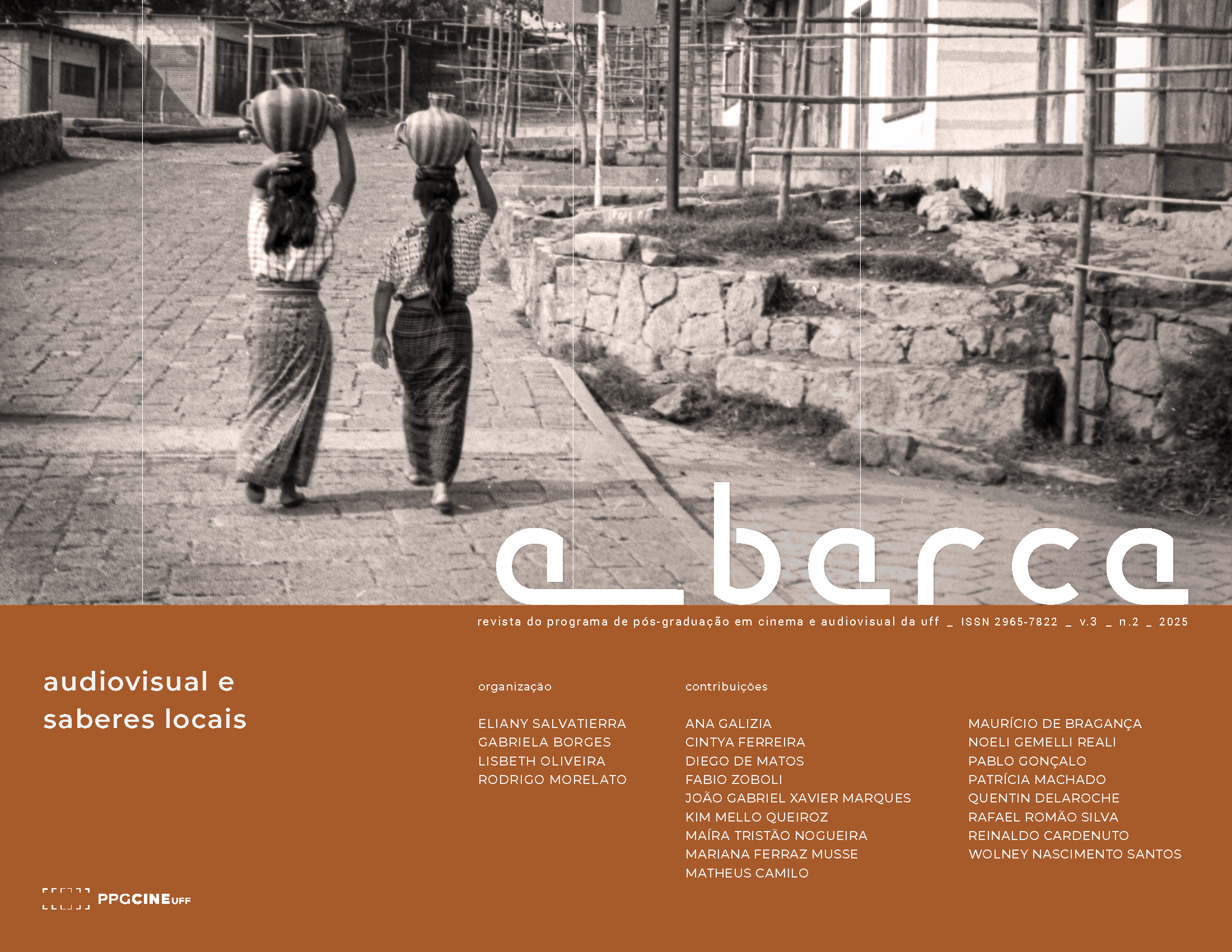
Audiovisual and Local Knlowledge
Vol. 3 No. 2 (2025)
We understand the Audiovisual as a field that involves the creation, circulation, and consumption of images and sounds, where aesthetic and political proposals are made.
By "local knowledge" we understand the sets of knowledge, practices, attitudes, skills, and experiences that are produced and shared in a commonplace way in our daily lives. Historically devalued throughout the trajectory of Western thought, which seeks to legitimize itself as universal, local knowledge gains visibility with the epistemological turn in the studies of the everyday, which has enabled other forms of understanding social practices and cultural multiplicity.
Although local knowledge has its privileged space for production, reproduction, and consumption in interpersonal relationships, the 21st century has expanded its ways of doing: they are transmitted today on social networks, in schools, and through audiovisual productions, due to their relevance for learning and their cultural significance.
Thus, the understanding of local knowledge carries with it the valorization of the cultural and epistemological diversity that inhabits our societies; and it pays special attention to the inseparability between audiovisual creation and the binding processes between people and territories.
For this dossier of the Revista A Barca, we propose the intersection between the fields of Audiovisual and everyday studies, thus seeking accounts that pursue this intersection as an active form of social, cultural, artistic, and political resistance.
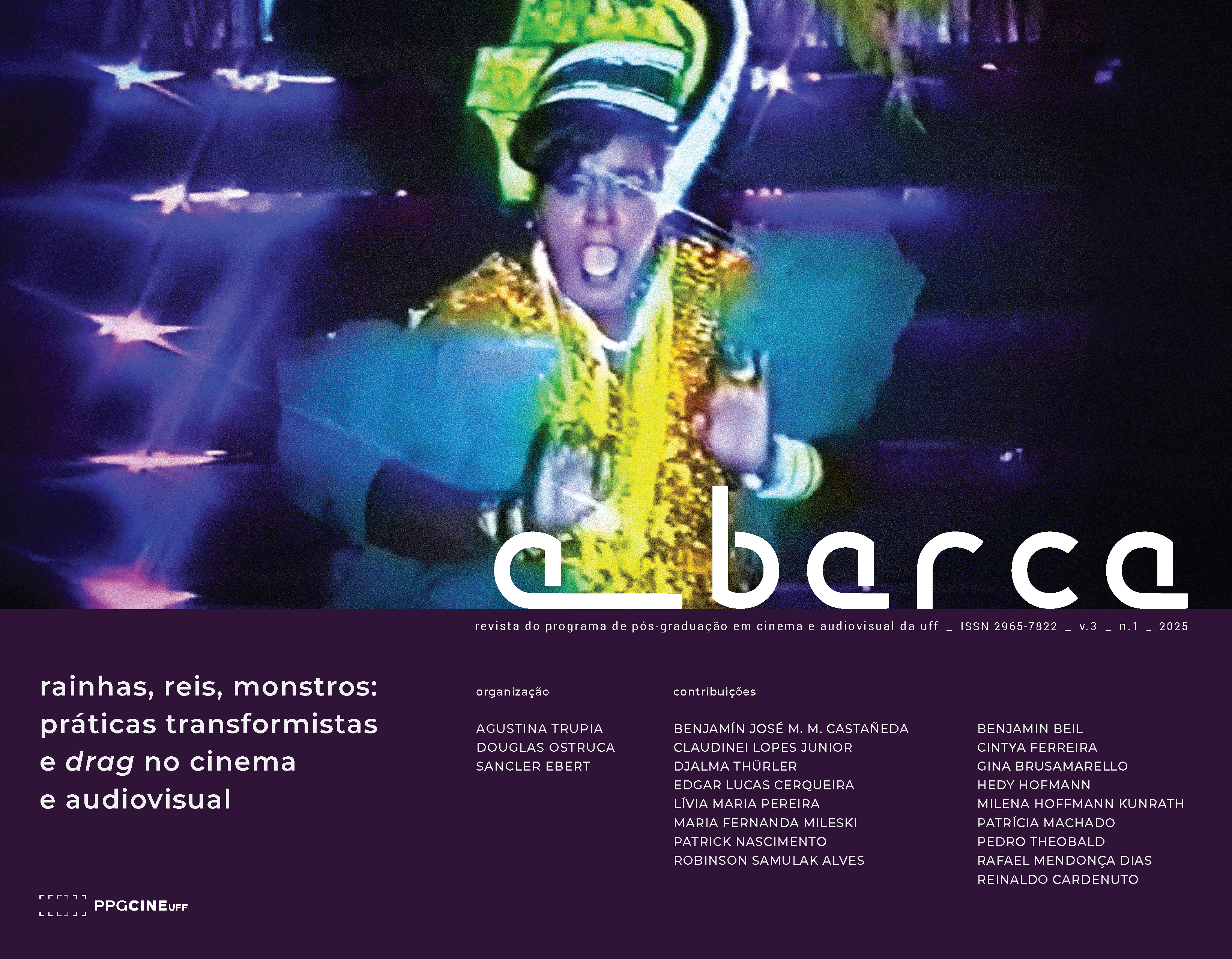
v. 3 n. 1 (2025): Queens, Kings, Monsters: Transformist Practices and Drag in Film and Media
Vol. 3 No. 1 (2025)
In this fifth issue, A Barca presents the dossier “Queens, Kings, Monsters: Transformist Practices and Drag in Film and Media,” organized through an international partnership between Sancler Ebert (UFF/FMU-FIAAM), Douglas Ostruca (UFRGS), and Agustina Trupia (CONICET-UBA). The dossier comprises eight texts: one visual essay, two articles, three contributions to the Free Section, and two interviews. Further details are available in the dossier’s introduction, authored by Ebert, Ostruca, and Trupia.
This voyage also features an article, a translation, and the first installment of the encyclopedia Cinemas in Confrontation: Short and Medium-Length Films in Response to the Brazilian Military Dictatorship, covering the period from 1964 to 1968. The encyclopedia is coordinated by Reinaldo Cardenuto (UFF), Patrícia Machado (PUC-RJ), and Cintya Ferreira (UFF). In the article “E os Novos Baianos te podem curtir numa boa": A Genealogy of ‘Curtição’ between Marginal Cinema and Brazilian Popular Music, Rafael Mendonça Dias (UFF) investigates curtição (a Brazilian Portuguese term blending “fun” and “political/artistic engagement”) as a creative and political gesture during the Brazilian civil-military dictatorship (1964-1985). Our final boarding is the translation “Mindscapes, Mental Landscapes: Spaces of Memory in Contemporary Cinema,” translated from German by researchers Gina Brusamarello (UFRGS), Hedy Hofmann (UFRGS), Milena Hoffmann Kunrath (PUCRS), and Pedro Theobald (PUCRS).
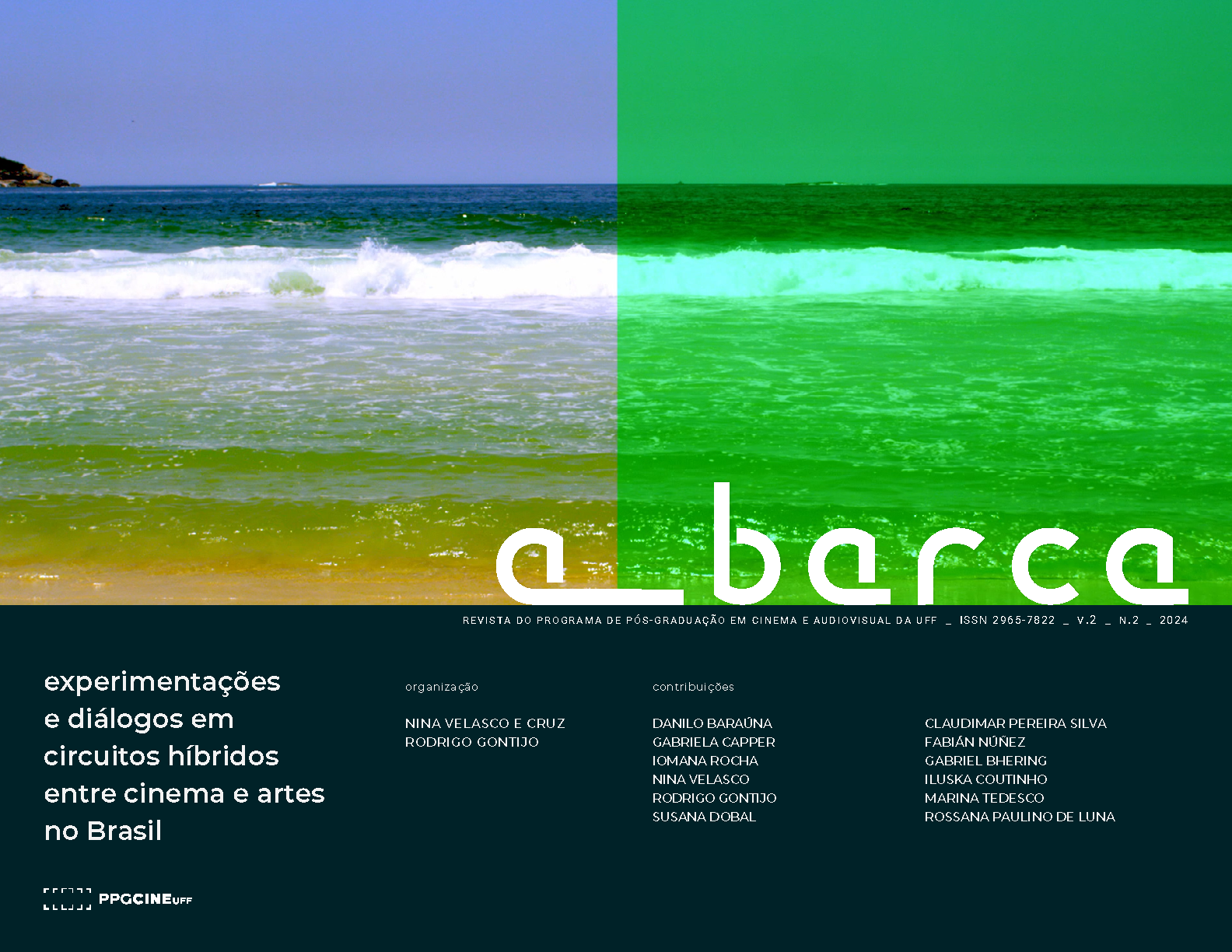
Experimentações e diálogos em circuitos híbridos entre cinema e artes no Brasil
Vol. 2 No. 2 (2024)
Concluímos o segundo ano de travessias d' A Barca com o dossiê "Experimentações e diálogos em circuitos híbridos entre cinema e artes no Brasil" com a expectativa de passear pelas pesquisas que procuram por um tal outro audiovisual, desviante da Forma Cinema. Outros mares e oceanos não pode ser abandonados ou excluídos, mas servem ótimas lições a quem navega.
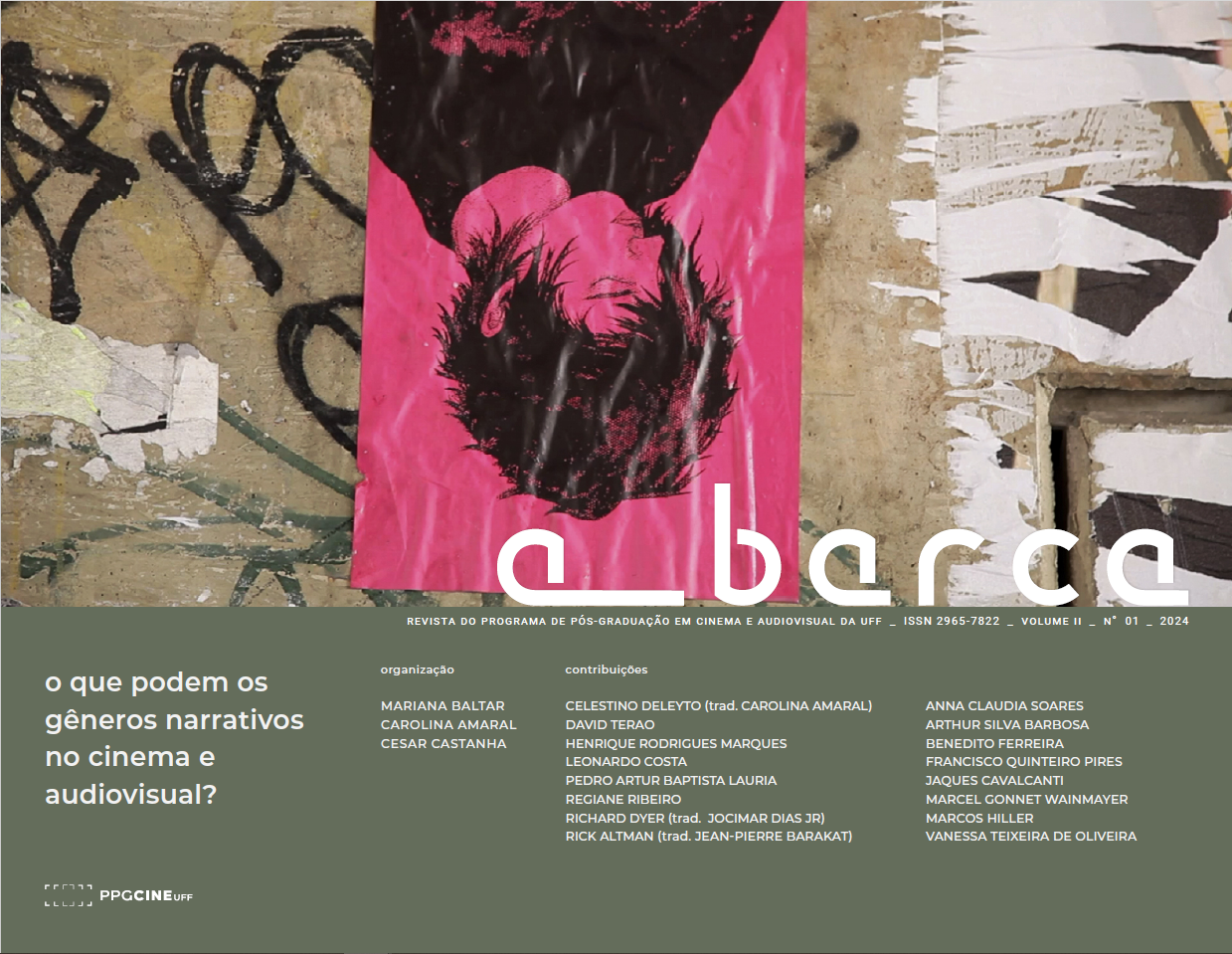
O que podem os gêneros narrativos no cinema e audiovisual?
Vol. 2 No. 1 (2024)
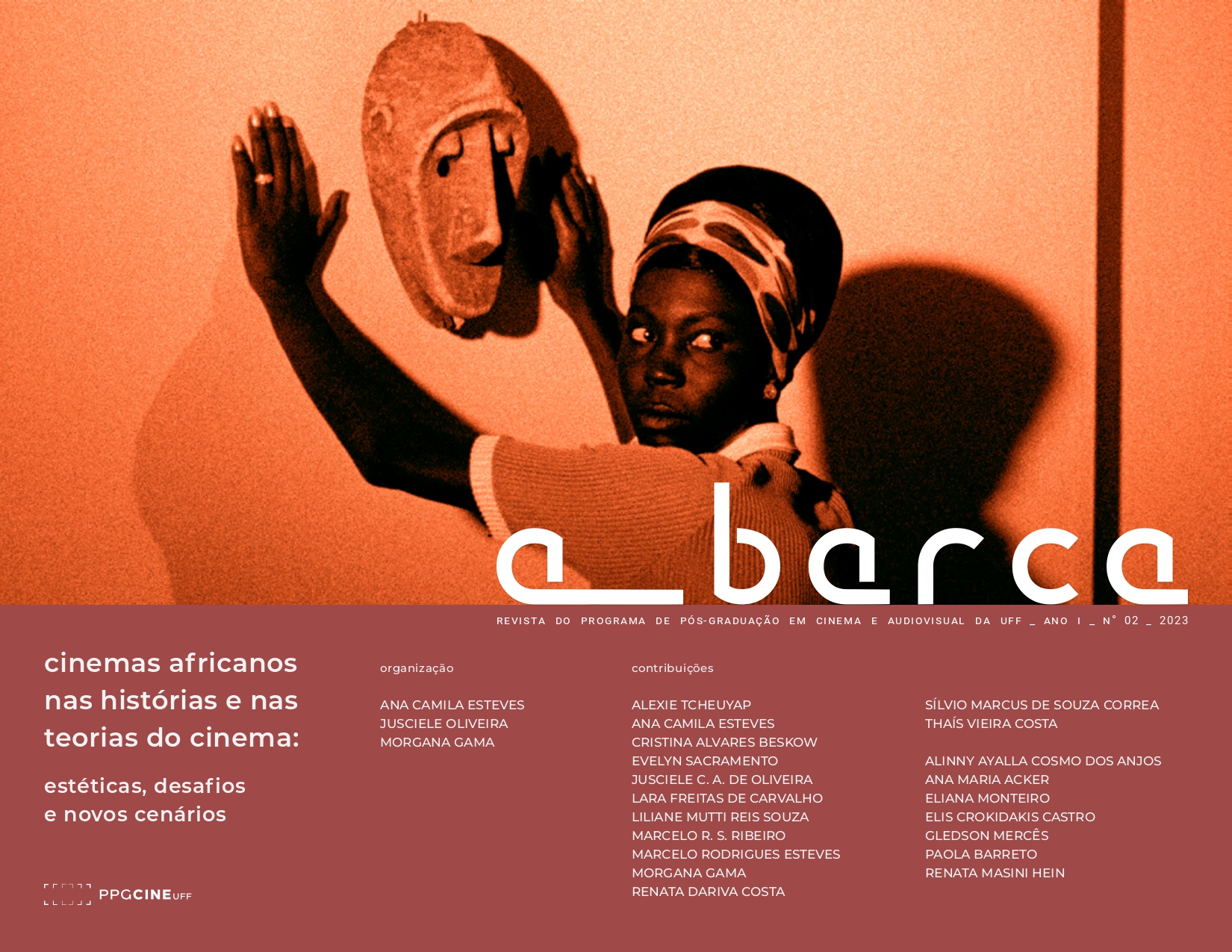
Cinemas africanos nas histórias e nas teorias do cinema – estéticas, desafios e novos cenários
Vol. 1 No. 2 (2023)
Uma nova Barca no mar!
O segundo número da revista A Barca é dedicado às pesquisas sobre cinemas africanos no Brasil, no intuito de complexificar o modo como se ensina e se compreende as histórias e as teorias do cinema. Com este dossiê, espera-se contribuir para ampliar e alocar os filmes africanos nas discussões e análises teóricas, estilísticas e metodológicas do audiovisual.
Navegar ainda é preciso! Boa leitura!
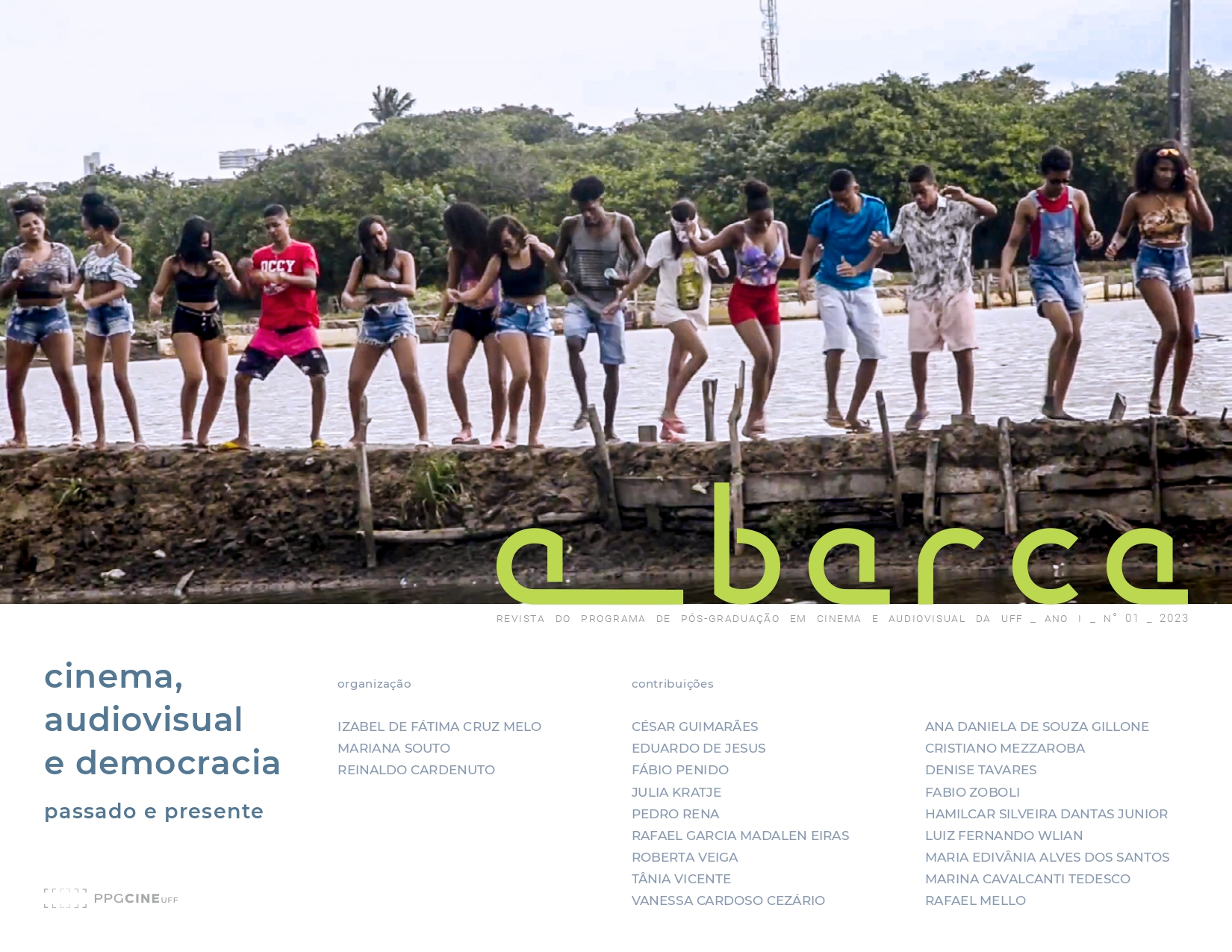
Cinema, audiovisual e democracia – passado e presente
Vol. 1 No. 1 (2023)
Bem-vindas/es/os à nossa Barca!
A Barca integra a trajetória dos estudos de Cinema e Audiovisual na UFF, os temas emergentes e as novas dinâmicas simbólicas, econômicas, éticas, estéticas e políticas da experiência audiovisual e midiática. Neste primeiro número, o dossiê Cinema, audiovisual e democracia – passado e presente aborda a relação entre o cinema e as frágeis estruturas democráticas e os modos de relação entre o audiovisual e as formas de organização social e política.
Navegar é preciso!